Is the AI boom coming to an end? It was always clear that the strong boom would likely be temporary. However, we will only know in hindsight whether that is already happening. Booms can last longer than often assumed.
So far, different narratives have coexisted in the business and economic world. Some argue that artificial intelligence will rapidly transform the economy and significantly boost economic growth. Others expect only moderate productivity gains at the macroeconomic level. Obviously, there are additional narratives concerning the economic and societal impacts of AI.
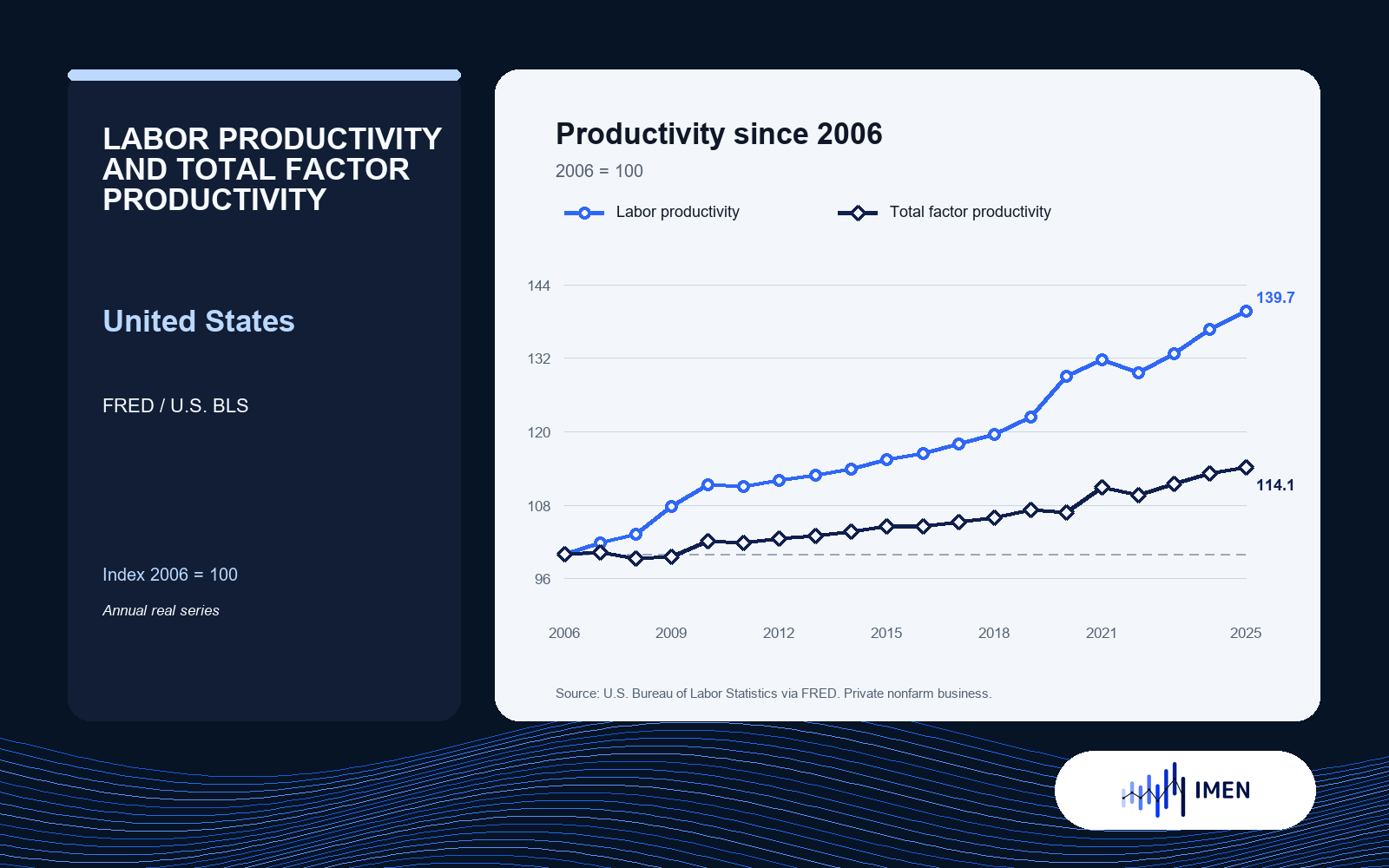
At this point, it can be said that in the United States, where the boom surrounding artificial intelligence and its applications has progressed further than in most other advanced economies, productivity gains appear plausible but have so far remained moderate. Labor productivity (economic output per hour worked) has increased at a solid pace since the pandemic after a period of weak performance (Figure 1). However, this development may not have been driven by AI. Other possible explanations include the increased use of flexible and remote working arrangements. Nevertheless, this trend undoubtedly represents an indication of positive productivity effects.
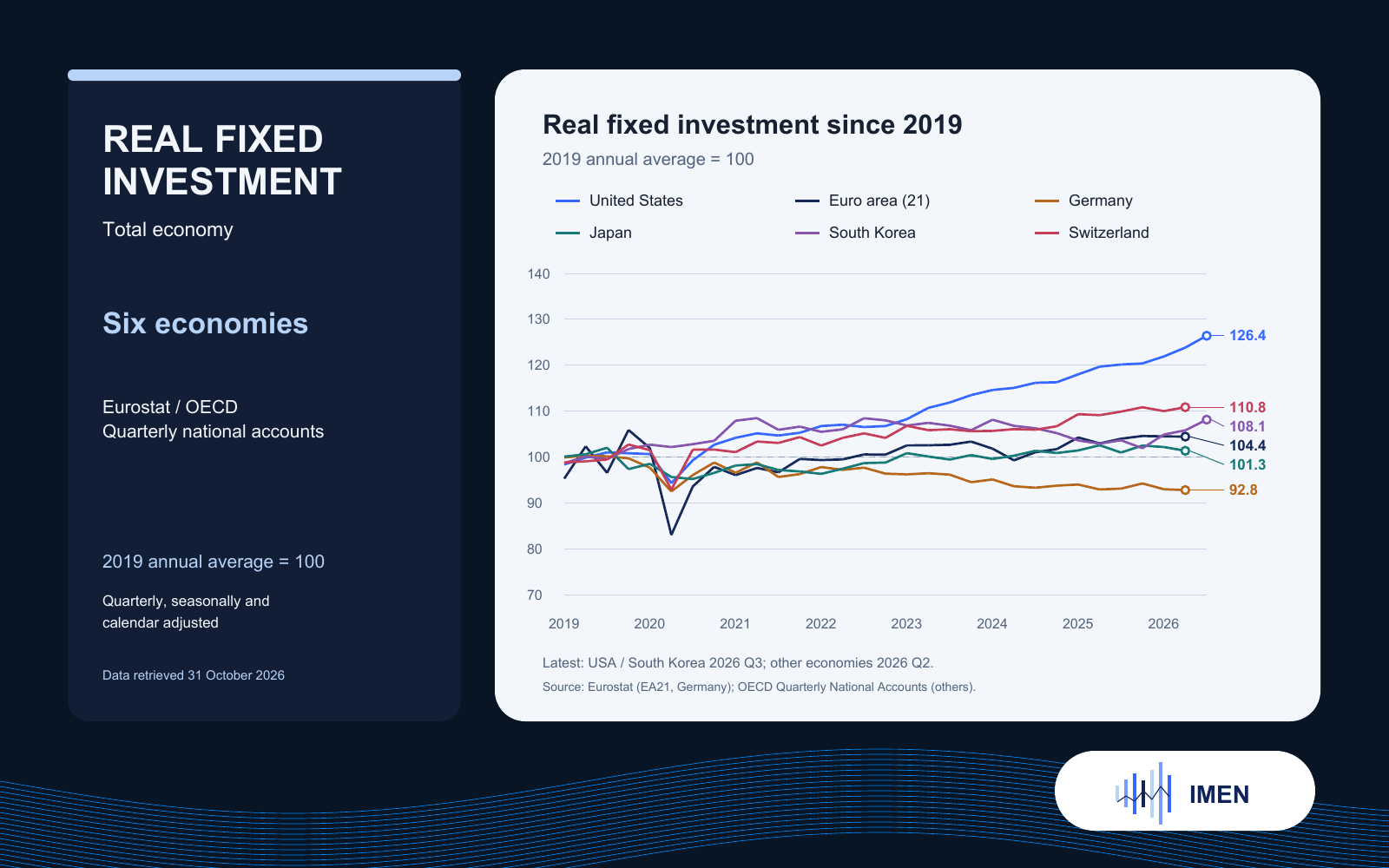
At the same time, labor productivity has also been driven by substantial investments, for example in data centers, which have expanded the capital stock (Figure 2). The so-called Total Factor Productivity (TFP), which can be viewed as a broad measure capturing the various influences on economic output beyond labor and capital, has experienced an even more moderate increase than labor productivity. This is important because TFP theoretically captures broad-based productivity gains from AI very well. In practice, however, TFP measurement is subject to a variety of challenges, partly because, as a residual measure, it also reflects factors such as education, regulation, and bureaucracy.
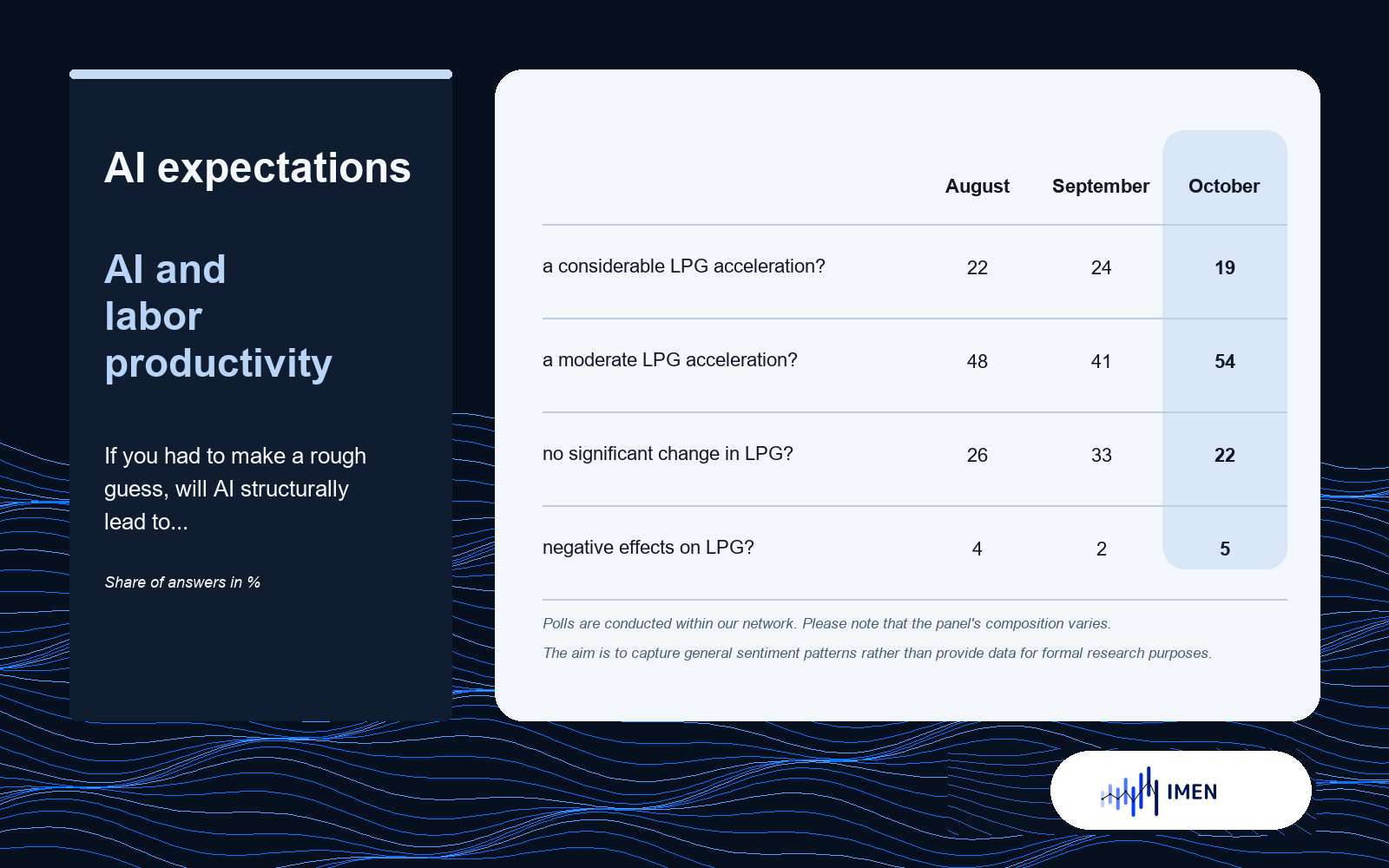
At the very least, it can be concluded that TFP has not yet shown signs of dramatic productivity gains. This would support the narrative that many technology firms are overvalued. Results from the surveys that we regularly conduct within the IMEN network point in a similar direction (Figure 3). Many respondents expect moderate productivity gains from AI. However, there are also many who expect either substantial productivity gains or no meaningful gains at all.